
Turkish Bazaars Markets
Bazaars are working markets as well as tourist sights, and in Turkey they are central to how cities live. This guide covers the best-known covered markets, what to buy, how to bargain and how tax-free shopping works. For the Grand Bazaar in detail, our dedicated guide follows.
Istanbul’s bazaars
The Grand Bazaar
The Grand Bazaar (Kapalıçarşı) is Istanbul’s historic covered market. Its merchants’ association dates it to 1461 and counts 65 streets and 3,600 shops, while the national tourism site gives different counts, so treat any number as approximate. Jewelry, carpets, textiles, lamps, ceramics, leather, copperware and antiques are the main goods, and the Beyazıt Gate carries the sign of Sultan Abdülhamid II with the words “God loves the merchants”. Hours of 08:30 to 19:30 in summer and 08:30 to 19:00 in winter are listed in an undated tourism press release, and secondary sources say it is closed on Sundays, so check before you go.
The Spice Bazaar
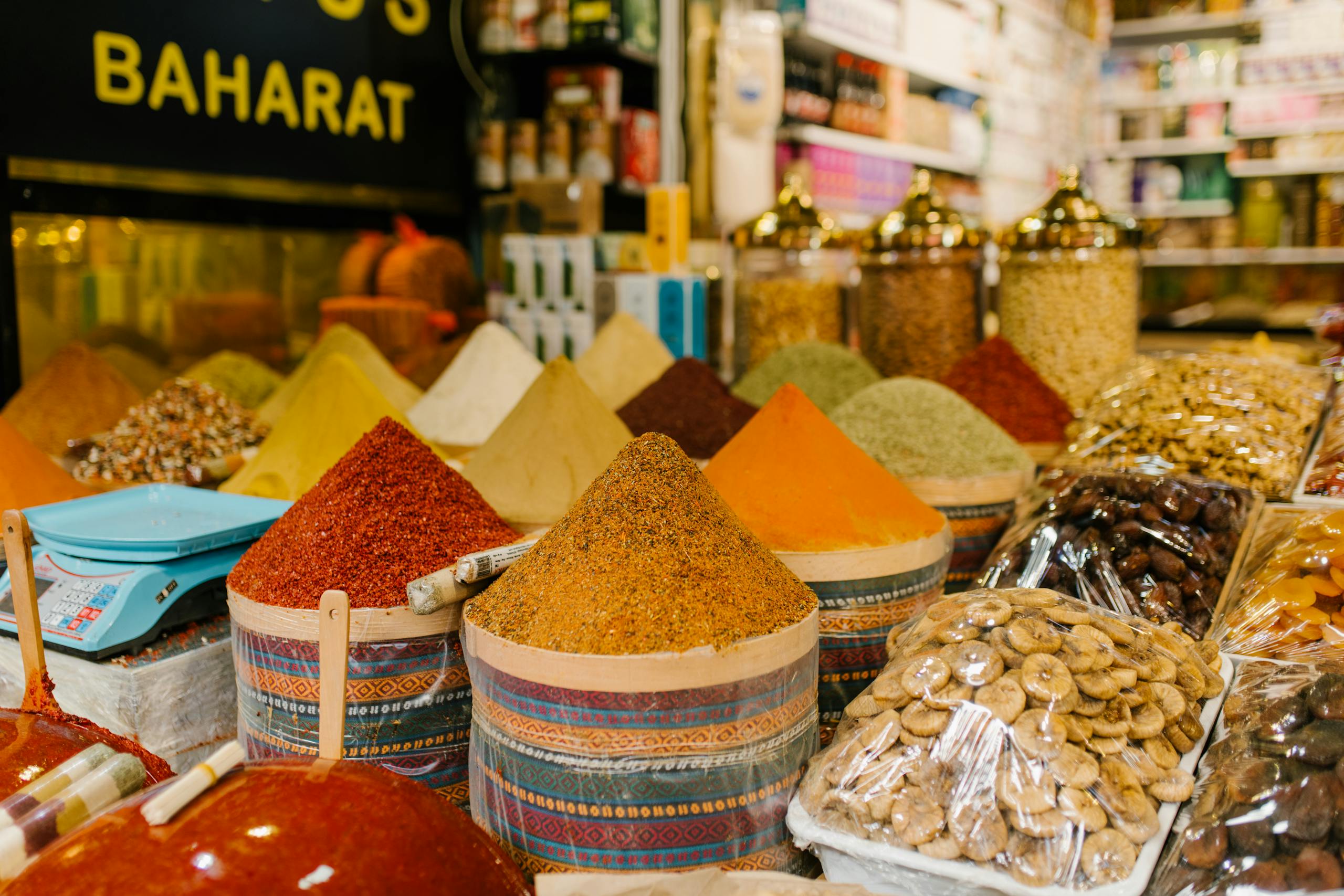
The Spice Bazaar sells spices, lokum (Turkish delight), dried fruits, nuts, Turkish coffee and teas. Taste before you buy, and compare prices.
Arasta Bazaar
The Arasta Bazaar lies near the Blue Mosque in Sultanahmet, and the Grand Bazaar page lists it as a related place. It is smaller and quieter, and good for handicrafts.
Neighborhood markets
Istanbul has neighborhood street markets on set days of the week in Beşiktaş, Kadıköy and Üsküdar, selling fish, produce, clothing, linens and kitchenware. Çukurcuma has antique and secondhand shops. Check the market day before you go.
Other cities
- İzmir. The Kemeraltı bazaar is the city’s historic market, with a history of about 500 years. See İzmir.
- Gaziantep. The Bakırcılar copper bazaar is a must for craft, and Gaziantep baklava holds a geographical indication. See Gaziantep.
- Edirne. The Selimiye Arasta Bazaar, built in 1590, is the place for Kavala cookies and almond paste. See Edirne.
- Bursa. The Koza Han silk trade inn and the towel and textile inns. See Bursa.
- Safranbolu. The Demirciler Bazaar has kept its Ottoman look. See Safranbolu.
What to buy
The usual list: carpets and kilims (Hereke and Gördes are named), ceramics, copper and brassware, jewelry, leather, textiles and towels, spices, lokum and tea. Buy what you will use, and ask for receipts and written descriptions. Be careful with antiques: the UK says buying or exporting antiquities illegally can bring 5 to 12 years in prison, so ask about documentation. For gold, ask what the purity stamp means and request an itemized receipt.
Bargaining
Haggling is part of the culture. Take your time, compare prices in several shops and do not feel pressured. Tea is commonly offered during negotiations, and accepting it does not oblige you to buy. Shops with fixed price tags usually do not bargain. Do not start a negotiation you do not intend to finish, and ask for the price in writing. There is no standard discount, so we do not give percentages.
Tax-free shopping
Foreign visitors can claim a refund of VAT at shops with the Tax Free logo. Ask for the form at the till, give your passport details, and have the clerk sign it. The form is valid for three months from the invoice date, and you submit it with your purchases, invoices, boarding pass and passport to customs at the airport (Istanbul Airport or Sabiha Gökçen). Minimum spends differ between sources, so confirm in the shop.
Tips for a good visit
- Go in the morning, before the crowds and the heat.
- Carry some cash, and small notes for tea and small purchases. See our money guide.
- Watch your bag in crowded alleys. See our safety guide.
- Dress modestly if you will also visit a mosque. See our culture and etiquette guide.
Frequently asked questions
Do you have to bargain in Turkish bazaars?
Haggling is part of market culture. Shops with fixed prices usually do not negotiate. Take your time and compare.
What are the best bazaars to visit in Istanbul?
The Grand Bazaar, the Spice Bazaar and the Arasta Bazaar are the best known. Neighborhood markets in Beşiktaş, Kadıköy and Üsküdar are held on set days.
Can I take antiques out of Turkey?
Be careful. The UK says illegal purchase or export of antiquities can bring prison terms of 5 to 12 years. Ask for documentation.
Is tax-free shopping available?
Yes, at participating shops, with the form submitted to customs at the airport. Confirm thresholds in the shop.
What should I buy as a souvenir?
Carpets and kilims, ceramics, copperware, jewelry, leather, spices and lokum. Ask for receipts.
What time do bazaars open?
Hours vary. The Grand Bazaar is listed at 08:30 to 19:30 in summer and 19:00 in winter, and is reported closed on Sundays. Check before you go.
Sources: Grand Bazaar Merchants’ Association; Go Türkiye; UK Foreign, Commonwealth and Development Office. Updated October 2026.
 English (UK)
 Türkçe
 Deutsch
 Русский
 العربية
 Français
 Italiano
 Polski
 Български
 Español
 Nederlands
 简体中文
 Українська
 हिन्दी