
Turkish Food Guide: What to Eat in Turkey
Turkish food is built on a few simple ideas: good bread, fresh vegetables and olive oil on the coast, grilled meat in the interior, and a table that is meant to be shared. The result varies enormously by region, and the best way to eat in Turkey is to eat what the place is known for. This guide covers the dishes and drinks worth looking for, how a meal works and where to eat well without overpaying. For breakfast in detail, see our Turkish breakfast guide.
How a Turkish meal works
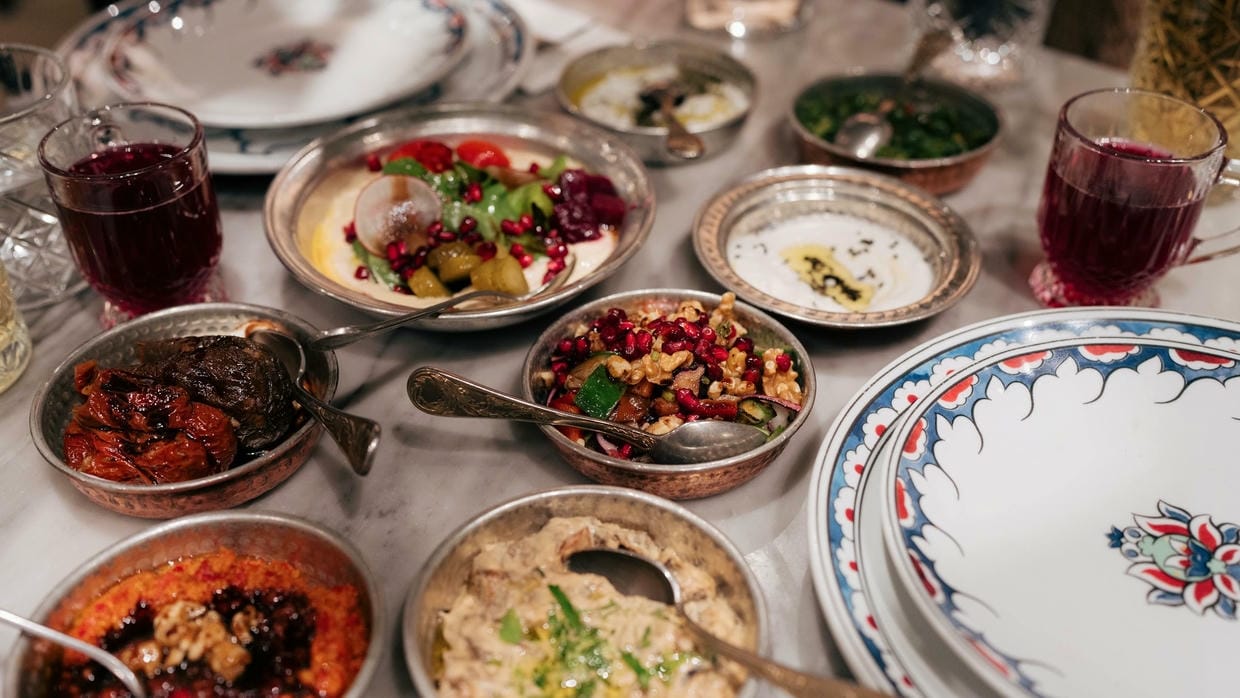
Meals are social and unhurried. Meze, small cold plates, arrive first, then grilled dishes or stews, then fruit or dessert and tea. Bread is free in most places, the bill has to be requested, and one person often pays for the table. Lunch is the main meal for many Turks, and dinner is later in summer. The local canteen, the esnaf lokantası, serves buffet-style home cooking at a fixed price per plate, with free bread and no service fee, and it is the best-value meal in any city: point at what you want.
Breakfast
A Turkish breakfast is many small plates of cheese, jams, olives, honey, eggs and pastries, served with black tea. It is a social meal that can last for hours. Our breakfast guide covers what is on the table, the words to know and the Istanbul areas where it is a ritual.
Street food and quick meals
- Simit: a sesame bread ring sold from carts across the country, eaten with tea.
- Balık ekmek: a fish sandwich, associated with the waterfront at Eminönü in Istanbul.
- Lahmacun and pide: thin flatbread with minced meat and spices, and boat-shaped flatbread with meat, cheese or vegetables, baked in a wood oven.
- Gözleme: thin flatbread folded around fillings and cooked on a griddle.
- Börek: flaky pastry with cheese, spinach, meat or potato.
- Döner and kebabs: meat cooked on a vertical spit or on skewers, served with rice or bread.
Kebabs and regional dishes
Kebab is a category rather than one dish, and each region has its own. Adana kebab is minced lamb shaped on wide skewers, and Urfa kebab is a milder version. İskender kebab is slices of döner on bread with tomato sauce and butter, associated with Bursa. Gaziantep is the food capital of the southeast, with baklava, pistachios and spicy lamb dishes, and the Black Sea is known for hamsi, the anchovy. Pastırma, air-cured beef, and sucuk, a spicy sausage, are common across the country. See the Gaziantep, Bursa, Adana and Trabzon pages.
Meze, fish and olive oil
Meze are small dishes served before the main course, such as cacık (yogurt with cucumber), fava and haydari, and olive oil is central to many of them. On the coast, fish restaurants serve the day’s catch, often chosen at the counter. The Bosphorus is known for lüfer, a fish whose season starts around late October, and the Black Sea is known for hamsi.
Sweets
Baklava is layers of phyllo with syrup and nuts, and Gaziantep baklava holds a geographical indication. Milk desserts such as sütlaç (rice pudding), kazandibi and sakızlı muhallebi are served everywhere. Lokum, Turkish delight, is a starch and sugar candy flavored with rosewater, lemon or mint.
Drinks
- Tea (çay): freshly brewed black tea, the national drink.
- Turkish coffee: unfiltered coffee brewed in a cezve. UNESCO inscribed Turkish coffee culture and tradition in 2013.
- Ayran: a savory yogurt drink made with salt and water.
- Rakı: an aniseed spirit, served with meze and water.
- Boza and salep: winter drinks, boza slightly sweet and sour and salep warm and topped with cinnamon.
The UK warns that illegally made and counterfeit spirits have caused deaths, so buy alcohol only from licensed venues. See our safety guide.
Where to eat well
Walk a few streets away from the major sights, since restaurants beside the big attractions are often priced for tour groups. Look for places that are busy with locals, where the menu is short and prices are posted. Check your bill, and ask whether service is included. Markets and bakeries are excellent for quick lunches. For tours, see our culinary tours page, and for food shopping read our bazaars and markets guide.
Dietary needs
Many Turkish dishes are vegetarian, with vegetable meze, lentil soup, stuffed vegetables and cheese pastries. Say clearly if you avoid meat, because stocks and some dishes contain it. For allergies, show the word or a card in Turkish and ask the kitchen. Alcohol is available in most cities and resorts, and is harder to find in some conservative areas.
Frequently asked questions
What are the must-try dishes in Turkey?
Start with kebabs, meze, pide and börek, then try regional dishes where you travel. Baklava, milk desserts and Turkish coffee are worth seeking out.
What is a Turkish breakfast?
A shared spread of many small plates, including cheese, jams, olives, honey, eggs and pastries, served with black tea. See our breakfast guide.
Is Turkish food spicy?
It varies by dish and region. Some kebabs and sauces are spicy, and many dishes are mild. Ask when you order.
Is alcohol available in Turkey?
Yes, in many restaurants and bars, but the UK warns that illegally made and counterfeit spirits have caused deaths. Buy alcohol from licensed venues.
What is an esnaf lokantası?
A local restaurant serving buffet-style food at a fixed price per plate, with free bread and no service fee. Point at what you want and check the price first.
Is Turkey good for vegetarians?
Yes, with vegetable meze, lentil soup and stuffed vegetables, but say clearly that you avoid meat.
Sources: Go Türkiye gastronomy pages; UNESCO; UK Foreign, Commonwealth and Development Office. Updated October 2026.
 English (UK)
 Türkçe
 Deutsch
 Русский
 العربية
 Français
 Italiano
 Polski
 Български
 Español
 Nederlands
 简体中文
 Українська
 हिन्दी