
Money in Turkey – Money Guide
The Turkish lira (TRY, symbol ₺) is the only currency you will use in shops, restaurants and markets, and the lira has weakened sharply in recent years, so prices in this guide are given as ranges, rates and principles, not as a price list. This guide explains where to get lira, how to pay, what to avoid, and how to bargain and tip. For dated prices of sights and transport, read our budget guide.
Exchange rates
On 16 October 2026 the Central Bank of the Republic of Türkiye (CBRT) selling rates were about 49.45 lira to the US dollar and 55.62 lira to the euro. Use them for scale only, since the lira moves daily and the rate you receive will differ. Check the CBRT site or your bank before you travel, and use a currency app for live rates.
Banknotes and coins
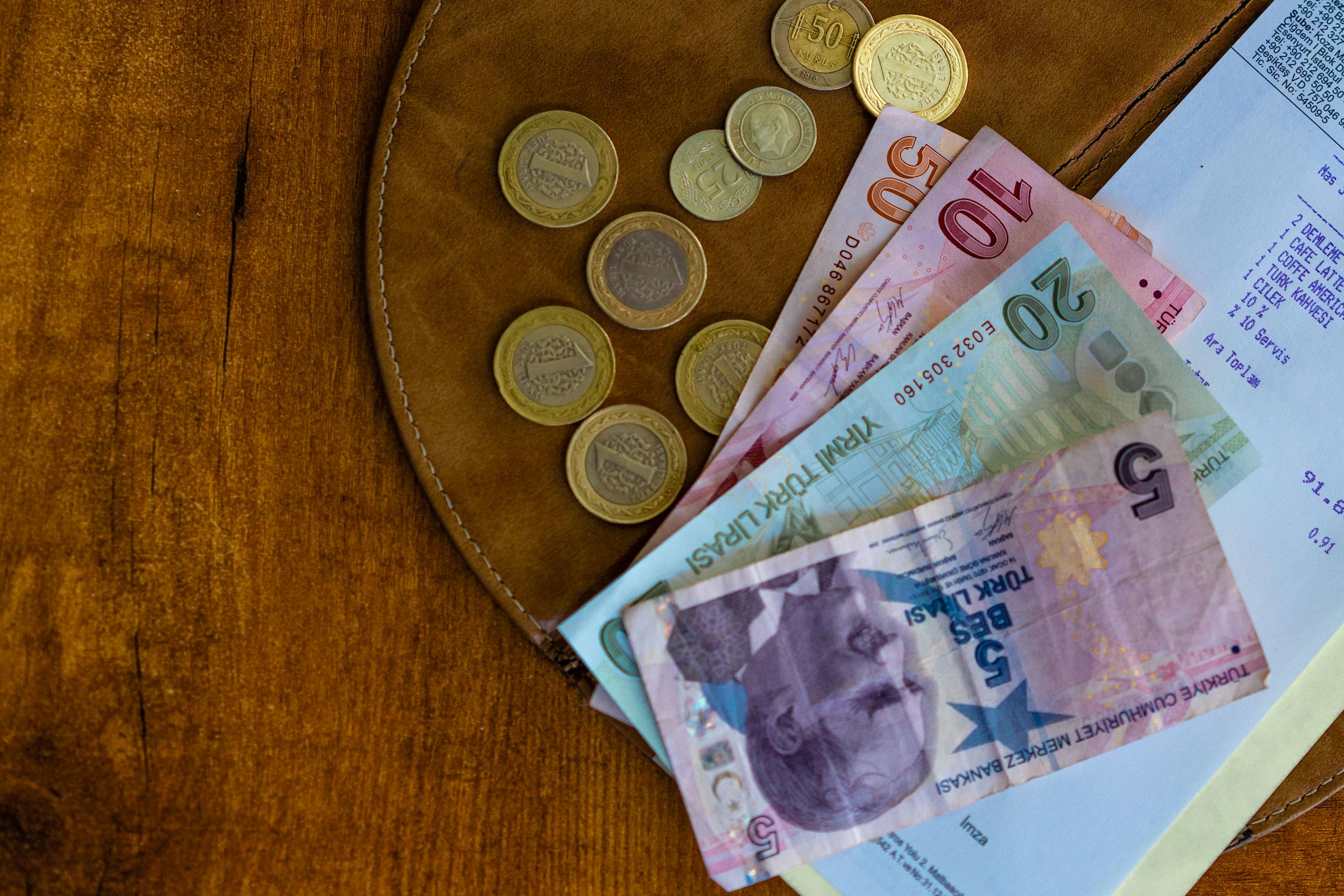
The CBRT’s annual reports through 2020 list lira notes of 5, 10, 20, 50, 100 and 200, and the coins are in kuruş (100 kuruş equal 1 lira) and lira. The CBRT says Turkish lira banknotes have security features that make them easy to tell from counterfeits. We could not confirm from the CBRT site whether larger notes have been issued since, so check its banknote pages for the current set. Small notes and coins are useful for tea, simit, minibuses and tips, since small vendors often cannot change large ones.
Getting lira
- ATMs. They are widespread in cities and towns. If the machine offers to charge you in your home currency or in lira, choose lira, which avoids the machine’s own conversion rate. Use machines attached to bank branches where you can.
- Exchange offices (döviz bürosu). They are common in tourist areas. Compare the buy and sell rates, and compare more than one office, since the spread is the real fee.
- Airports and hotels. Compare the posted rates before you exchange, and exchange only what you need.
- Cards. Acceptance varies by business. Carry some cash for markets, small shops, taxis and rural areas, and tell your bank you are travelling.
Counterfeit money
The UK says banks may refuse 50 and 100 US dollar bills because of counterfeits, so avoid accepting them. If you carry foreign cash, bring clean, undamaged notes and exchange them at a bank or licensed office.
Bargaining
Haggling is part of the culture in bazaars and markets, such as the Grand Bazaar, and the advice is to take your time and not feel pressured. Tea is commonly offered during negotiations. Shops with fixed price tags usually do not bargain. We do not give percentages, because there is no standard discount. Compare prices in several shops, ask for the price in writing, and ask for a receipt. See our bazaars and markets guide.
Tipping
There is no official tipping scale. Check your bill first, because some restaurants add a service charge. Leave a little extra if you were happy with the service, and ask your guide, hotel or operator what is customary. Rounding up a taxi fare is common.
Tax-free shopping
Foreign visitors can claim a refund of VAT on purchases from stores with the Tax Free logo. You ask for the form at the till, give your passport details and have the clerk sign it. The form is valid for three months from the invoice date, and you submit it with your purchases, invoices, boarding pass and passport to customs at the airport, such as Istanbul Airport or Sabiha Gökçen. Minimum spends differ between sources, so confirm in the shop.
Common money mistakes
- Carrying only large notes, which small vendors cannot change.
- Accepting the machine’s or merchant’s conversion to your home currency.
- Exchanging at the airport or a hotel without comparing the rate.
- Accepting US dollar bills in poor condition, or a large denomination that banks may refuse.
- Not keeping receipts for tax-free refunds.
Plan your budget
For dated prices of sights and transport, read our Turkey travel budget guide. For entry rules, see the visa requirements guide, and for planning start with our Istanbul guide.
Frequently asked questions
What is the currency in Turkey?
The Turkish lira (TRY, ₺), divided into 100 kuruş. On 16 October 2026 the CBRT selling rate was about 49.45 lira to the dollar and 55.62 lira to the euro, but rates change daily.
Where should I exchange money in Turkey?
Compare ATMs at bank branches and licensed exchange offices, and compare buy and sell rates. If a machine asks whether to charge in lira or your home currency, choose lira.
Are credit cards widely accepted?
In many businesses in cities and tourist areas, but acceptance varies. Carry some lira for markets, small shops and rural areas.
Do I need to bargain in Turkey?
Haggling is part of market culture, and tea is often offered during negotiations. Shops with fixed price tags usually do not negotiate.
Should I bring foreign cash?
You can, but banks may refuse 50 and 100 US dollar bills. Bring clean, undamaged notes, exchange them at a bank or licensed office, and keep your card as a backup.
How much should I tip?
There is no official scale. Check the bill for a service charge and tip if you were happy with the service.
Sources: Central Bank of the Republic of Türkiye (rates, banknotes); UK Foreign, Commonwealth and Development Office; Go Türkiye (tax-free process). Updated October 2026.
 English (UK)
 Türkçe
 Deutsch
 Русский
 العربية
 Français
 Italiano
 Polski
 Български
 Español
 Nederlands
 简体中文
 Українська
 हिन्दी