
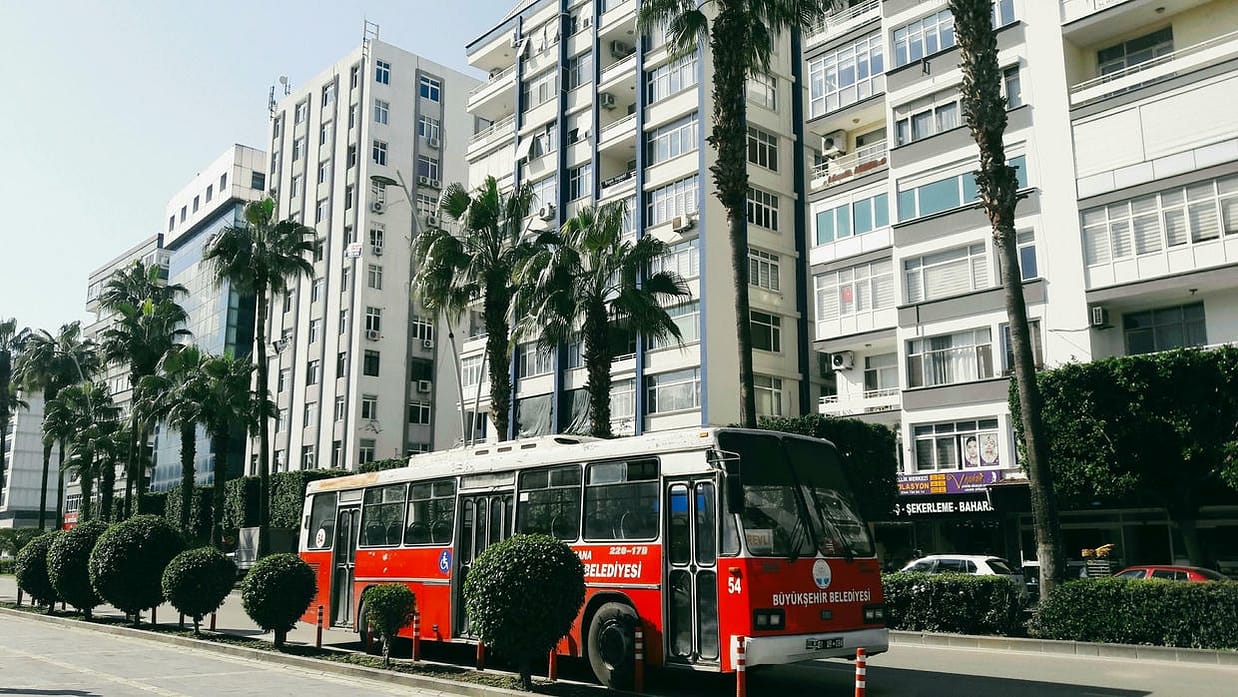
Getting Around Turkey: Complete Transport Guide
Turkey is a large country — roughly the size of France and Germany combined. Getting between cities efficiently requires understanding which transport mode suits each journey. This guide covers every option.
Domestic Flights
For journeys over 400km, flying is almost always the right choice. Turkey has an excellent domestic flight network, with Turkish Airlines, Pegasus, and AnadoluJet connecting Istanbul to 50+ Turkish cities. Prices are competitive and journey times to major destinations are typically 1 to 1.5 hours.
Key routes:
Istanbul (IST or SAW) to Izmir: 1 hour 10 min. Prices from $30-80.
Istanbul to Antalya: 1 hour 20 min. Prices from $30-80.
Istanbul to Bodrum (Milas): 1 hour 15 min.
Istanbul to Dalaman (Fethiye): 1 hour 20 min.
Istanbul to Kayseri (Cappadocia): 1 hour 20 min.
Istanbul to Trabzon: 1 hour 30 min.
Istanbul to Gaziantep: 1 hour 40 min.
Booking: Turkish Airlines (thy.com), Pegasus (flypgs.com), AnadoluJet (anadolujet.com). Book 2 to 4 weeks in advance for best prices. Prices spike during Turkish public holidays (check the calendar).
Istanbul’s two airports: Istanbul Airport (IST) handles most international and domestic routes. Sabiha Gokcen (SAW) on the Asian side handles Pegasus and budget carriers. They are 60km apart. Do not book arrival and departure from different airports without accounting for the transfer time.
Intercity Buses
Turkey has the best long-distance bus network in Europe. The main operators (Metro Turizm, FlixBus Turkey, Kamil Koc, Ulusoy) run modern coaches with reclining seats, air conditioning, onboard entertainment, and meal service on longer routes. For journeys of 4 to 8 hours, overnight buses are a practical and comfortable option.
Key routes and journey times:
Istanbul to Ankara: 5.5 to 6 hours. Frequent departures, 24 hours a day.
Istanbul to Antalya: 11 to 12 hours. Many overnight options.
Istanbul to Cappadocia (Goreme/Nevsehir): 9 to 11 hours overnight.
Istanbul to Bodrum: 12 to 13 hours overnight.
Ankara to Cappadocia: 4 to 4.5 hours.
Antalya to Fethiye: 3 hours.
Izmir to Ephesus (Selcuk): 1 hour.
Booking: Obilet.com aggregates all operators and allows booking with a credit card. Alternatively, buy directly from the bus terminal (otogar) on the day, though popular routes sell out on weekends and holidays.
Istanbul bus terminals: Esenler Otogar (European side, metro connected) serves most western and northern routes. Harem Otogar (Asian side) serves eastern and southern routes. Most Istanbul hotels are closer to Esenler.
Trains
Turkey’s rail network is undergoing significant expansion. The high-speed rail (YHT) connections that exist are excellent. Conventional rail is slower but scenic and very cheap.
High-speed routes (YHT):
Istanbul Halkali to Ankara: 4 hours 15 min. Approximately $15-25. The most useful HSR route for tourists — much faster than the bus.
Ankara to Konya: 1 hour 45 min.
Ankara to Eskisehir: 1 hour 30 min.
Conventional routes of interest:
Istanbul to Kars (overnight, 24 hours): The Dogu Express, one of Turkey’s great train journeys. Crosses Anatolia through increasingly dramatic landscape, arriving in eastern Turkey. Book well in advance — it sells out months ahead.
Booking: TCDD.gov.tr (Turkish State Railways). The English-language booking interface works but can be slow. An alternative is to book at any major train station.
Ferries and Sea Buses
Istanbul ferries: The Bosphorus ferry network (operated by Sehir Hatlari) is one of Istanbul’s greatest assets. The Istanbulkart contactless card works on all ferries. Key routes: Eminonu to Kadikoy (15 min), Eminonu to Anadolu Kavagi (Bosphorus tour, 1.5 hours each way), Besiktas to Kadikoy (10 min).
Turkish coast ferries:
Bodrum to Kos (Greece): Daily in summer, 1 hour.
Marmaris to Rhodes (Greece): Daily in summer, 1 hour.
Kusadasi to Samos (Greece): Daily in summer, 1.5 hours.
Cesme to Chios (Greece): Regular service.
Canakkale to Eceabat (for Gallipoli): 25 minutes, frequent crossings.
Istanbul to Izmir fast ferry: IDO operates a fast ferry across the Marmara Sea, reducing the Istanbul to Bursa or Yalova connection significantly.
Getting Around Within Cities
Istanbul: The Istanbulkart covers metro, tram, bus, sea bus, and ferry. Buy at any station (100 TRY, then top up). The T1 tram connects the airport metro to Sultanahmet and Karakoy. The M1 metro connects Ataturk (old) airport to the city. The new airport (IST) connects via metro to Gayrettepe and beyond. Journey from IST airport to Sultanahmet: approximately 1 hour by metro and tram, 70-100 TRY.
Taxis in Istanbul: Use the BiTaksi app. It shows the route and fare estimate before booking, eliminates meter manipulation, and provides a record of the journey. Never get in a taxi that approaches you at the airport.
Other cities: Most Turkish cities have a dolmus system (shared minibuses running set routes), taxis, and in larger cities a metro or tram. Izmir has a good metro. Antalya has a tram connecting the airport to the city. Ankara has an extensive metro network.
Renting a Car
Renting a car is the best way to explore the Turkish coast, Cappadocia, and rural areas. The road network is good, petrol stations are frequent, and GPS navigation works well (use Google Maps or download offline maps for remote areas).
Rules: Drive on the right. Speed limits: 50km/h in towns, 90km/h on rural roads, 120km/h on motorways. Seatbelts mandatory. Using a phone while driving is illegal. An international driving permit is recommended alongside your national licence though not always checked.
Tolls: Turkish motorways use the HGS electronic toll system. Rental cars come with an HGS transponder. Charges are collected automatically and added to your rental bill. Keep to non-motorway roads to avoid this if you prefer.
Parking: Blue-marked spaces in cities require payment via a machine or the mobile park app. Yellow marked spaces are reserved. In coastal areas, paid parking is standard at beaches.
Rental: All major international companies operate at Turkish airports. Budget and Sixt tend to be competitive. Book in advance for July and August when cars sell out. An international credit card is required for the deposit.
Istanbul Airport to the City
Istanbul Airport (IST):
Metro (M11): Runs from the airport to Gayrettepe (connection to M2 metro). Journey to Taksim Square: 40-45 minutes. Fare: approximately 75 TRY. First metro at 6am, last at midnight, then 24-hour service.
Havaist bus: Multiple routes to different city areas. Route HAV-1 to Taksim: 45-60 minutes (traffic dependent). 130 TRY.
Taxi: 45-60 minutes (heavily traffic dependent), 600-900 TRY. Use the official taxi rank, not touts.
Sabiha Gokcen (SAW):
Havabus: To Taksim Square via E5 motorway, 60-90 minutes. 100 TRY.
Metro (M4) + ferry: Metro to Kadikoy, ferry to Besiktas or Eminonu, then tram or metro to destination.
Taxi: 45-75 minutes, 400-600 TRY to the European side.
 English (UK)
 Türkçe
 Deutsch
 Русский
 العربية
 Français
 Italiano
 Polski
 Български
 Español
 Nederlands
 简体中文
简体中文 Українська
 हिन्दी