

Best Time to Visit Turkey: A Month by Month Guide by Region and Goal
The best time to visit Turkey for most first trips is April to June or September to October. Official weather records show mild daytime highs in Istanbul and Cappadocia in those months, and far less heat than midsummer. Beach holidays suit June to September. November to March is the quiet, wetter season. July and August are the hottest and busiest months.
Last verified: 17 October 2026. Weather figures are long-term station averages from the Turkish State Meteorological Service (MGM). Holiday dates come from the Diyanet calendar as reported in the Turkish press. Check the official pages before you book.

Best time to visit Turkey by goal
Turkey is large, so the best month depends on what you want to do. This table shows the main choices and the catch for each.
| Your goal | Best months | The catch |
|---|---|---|
| City sightseeing (Istanbul, Cappadocia) | April to June, September to October | Cappadocia still averages 12 to 13 rainy days a month in April and May |
| Beach holiday (Mediterranean and Aegean coasts) | June to September | Antalya’s average daily high reaches 34.2°C in July |
| Cappadocia balloon flights | April to June | Flights run on fewer days in winter, and one year is not a guarantee |
| Winter scenery and quiet sites | December to February | Cappadocia nights average below freezing in these months |
| Fewer crowds | November to March | Wettest period on the coasts and in Istanbul |
| Southeast Turkey (Diyarbakır) | March to May, October to November | July and August highs average more than 38°C |
| Black Sea coast | June to September | Rain falls on 8 to 13 days in every month |
Turkey weather by month
The table below uses official MGM averages for three reference places: Istanbul, Antalya on the Mediterranean coast, and Nevşehir in Cappadocia. Each cell shows the average daily high and the average number of rainy days.
| Month | Istanbul | Antalya | Cappadocia (Nevşehir) | What it means |
|---|---|---|---|---|
| January | 9.6°C, 16 days | 15.0°C, 12 days | 4.0°C, 12 days | Cappadocia nights average -3.6°C |
| February | 10.2°C, 14 days | 15.6°C, 10 days | 5.5°C, 12 days | Ramadan 2027 begins on 8 February |
| March | 12.4°C, 13 days | 18.0°C, 9 days | 10.3°C, 13 days | Ramazan Bayramı holiday, 9 to 11 March 2027 |
| April | 17.4°C, 10 days | 21.4°C, 6 days | 16.0°C, 12 days | Istanbul’s tulip season |
| May | 22.3°C, 8 days | 25.7°C, 5 days | 20.6°C, 13 days | Kurban Bayramı holiday, 16 to 19 May 2027 |
| June | 27.1°C, 5 days | 30.8°C, 3 days | 24.9°C, 8 days | Cappadocia balloons flew on 25 days in June 2026 |
| July | 29.7°C, 3 days | 34.2°C, 1 day | 28.5°C, 2 days | Peak heat and peak arrivals |
| August | 29.7°C, 4 days | 34.1°C, 1 day | 28.7°C, 2 days | Peak heat and peak arrivals |
| September | 25.9°C, 6 days | 31.2°C, 2 days | 24.5°C, 3 days | Dry on the coast, still hot in Antalya |
| October | 20.6°C, 9 days | 26.6°C, 5 days | 18.3°C, 7 days | Rain returns, Antalya averages 70.6 mm |
| November | 16.1°C, 11 days | 21.4°C, 7 days | 11.8°C, 9 days | Antalya averages 127.7 mm of rain |
| December | 11.8°C, 16 days | 16.7°C, 12 days | 6.2°C, 12 days | Antalya’s wettest month, 250.9 mm |
Source: Turkish State Meteorological Service (MGM), official climate statistics by province. Measurement periods: Istanbul 1950 to 2025, Antalya 1930 to 2025, Nevşehir 1959 to 2025. Rainy days rounded to the nearest whole day. These are long-term averages, not a forecast.
Best time to visit Turkey by region
This guide uses six reference cities to describe six parts of the country. Averages are daily highs from the same MGM source.
Istanbul and the Marmara region
Istanbul is mild and dry from May to September. The daily high is 22.3°C in May, 27.1°C in June and 25.9°C in September. Rain is most frequent from November to February, with 11 to 16 rainy days a month. April and October sit in between. The trade-off: July and August are the driest months but the hottest, with highs near 29.7°C and the heaviest visitor numbers. Read more in our Istanbul guide.
Aegean coast
Izmir has dry summers, with highs of 30.8°C in June, 33.3°C in July and 29.3°C in September, and rain on fewer than one day in July and August. May and October are milder, at 26.2°C and 24.1°C. Winter is wetter: January averages 134.5 mm and December 145.8 mm. See the Izmir page for the area.
Mediterranean coast
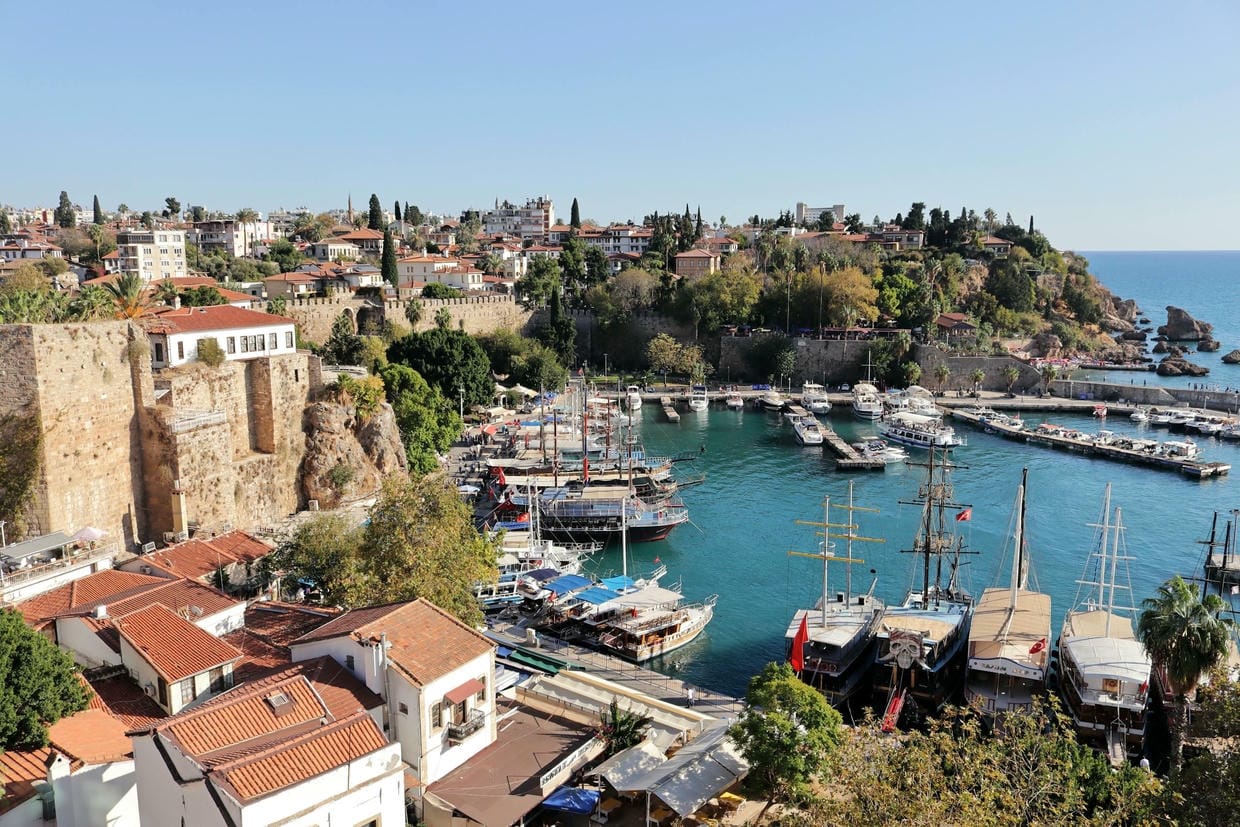
Antalya is the hottest of the coastal references, with highs of 30.8°C in June, 34.2°C in July and 31.2°C in September. Rain is very low from June to September, under 17 mm a month. Published sea temperature averages for Antalya run from about 17°C in February and March to about 29°C in August, with about 28.4°C in September and 25.5°C in October. These sea figures come from commercial weather sites, not MGM, so treat them as a guide. Winter is wet: December averages 250.9 mm. The trade-off for a summer beach holiday is the heat. Our Antalya page covers the area.
Cappadocia and central Anatolia
Cappadocia has hot, dry summers and cold winters. Nevşehir’s daily high is 4.0°C in January and 28.7°C in August, and nights average below freezing from December to February. Spring brings the most rainy days, 12 to 13 a month from March to May, while July and August are the driest months. Balloons are covered in a section below. See the Cappadocia page.
Black Sea coast
The Black Sea is the wettest of the six areas. Trabzon has rain on 8 to 13 days in every month, and October is the wettest month at 113.4 mm. The daily high reaches 26.1°C in July and 26.7°C in August. Because rain is spread through the year, a dry spell is never guaranteed, so pack for showers whenever you go. See the Trabzon page.
Southeast Turkey
Diyarbakır has very hot summers, with highs of 38.5°C in July and 38.3°C in August, and almost no rain. Spring and autumn are easier: 20.5°C in April, 26.7°C in May and 25.4°C in October. Winters are cold, with a January daily high of 6.8°C and nights below freezing. Read the Diyarbakır page for the area.
Crowds and prices
July and August are the busiest months. In July 2025 Turkey recorded 6,969,546 foreign arrivals, and August 2025 was about the same at roughly 7 million, according to provisional figures reported in the press. In July, Antalya received about 37 percent of arrivals and Istanbul about 27 percent.
These figures show where the crowds go but not what you will pay. We do not give percentage savings for off-season travel because we have no verified price data. Ask operators for a quote for your dates, then compare the same trip in two different months.
Holidays and events that change your trip
Holiday dates move each year, so plan around the date, not the month. These dates are for 2027.
| Event | 2027 dates | What to check |
|---|---|---|
| Ramadan | Begins 8 February | Check opening hours for your dates |
| Ramazan Bayramı | Eve 8 March, holiday 9 to 11 March | Public holiday |
| Kurban Bayramı | Eve 15 May, holiday 16 to 19 May | Public holiday of about four and a half days, check opening hours |
| Istanbul tulip season | April (the 2026 festival ran 1 to 30 April, according to press) | Dates change each year |
Dates are from Turkish press reports of the Diyanet calendar. Sources differ by a day on when Ramadan ends. Check the official calendar before you book.
Cappadocia balloons by month
Balloons only fly when the weather allows. In 2026, flights ran on 9 days in January, 8 in February, 13 in March, 18 in April, 17 in May and 25 in June, according to Anadolu Agency. In 2025, balloons flew on 223 days.
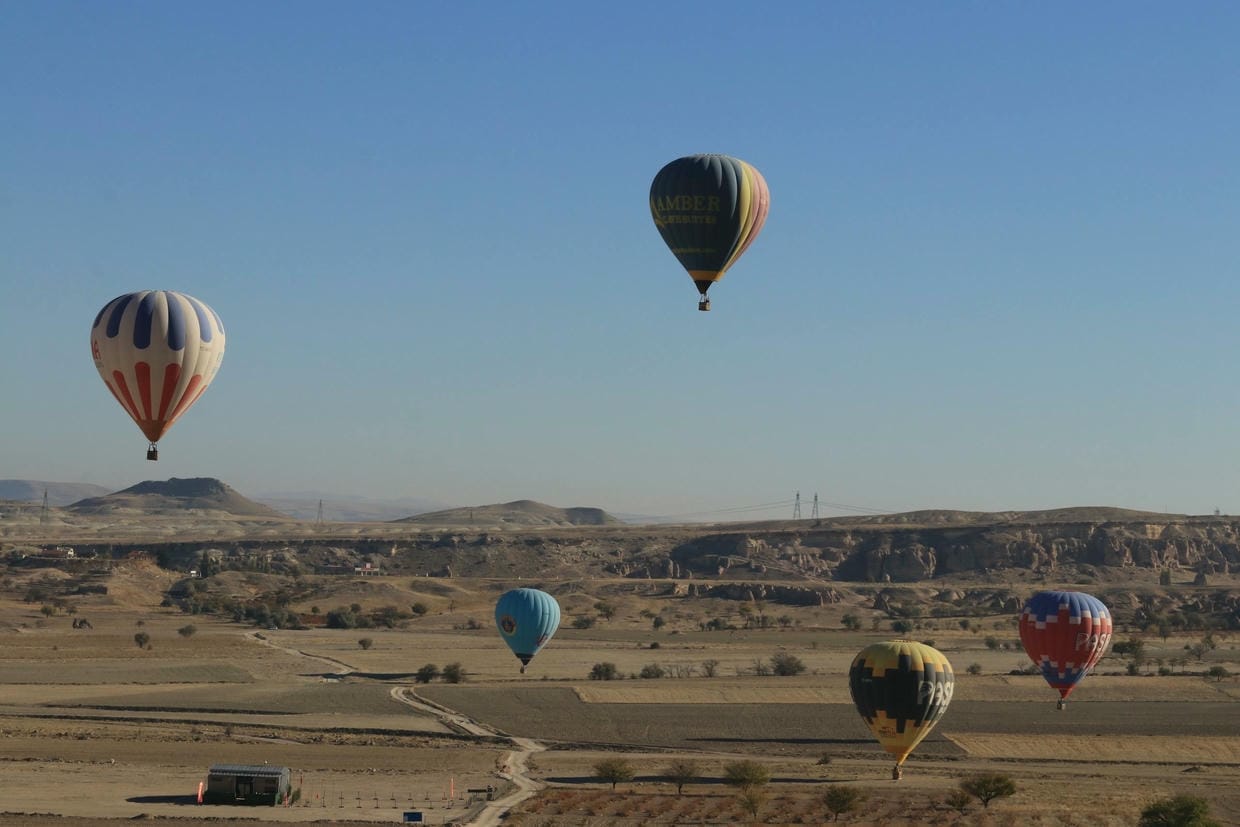
One year is not a forecast, and the numbers show only that winter had far fewer flight days than June. For prices, cancellations and safety, read our full Cappadocia hot air balloon guide.
Honest trade-offs by season
Summer (June to August). Best for beaches and long daylight. The catch is heat, with highs above 33°C on the Mediterranean and Aegean in July, and the largest crowds.
Shoulder seasons (April to May, September to October). The best balance for sightseeing in Istanbul and Cappadocia. The catch is that rain is more likely, especially in Cappadocia in spring and on the Black Sea in autumn.
Winter (November to March). Quiet for sightseeing, with cold nights in Cappadocia and many rainy days in Istanbul and Antalya. Plan indoor options, and expect fewer balloon flight days.
How to choose your month
- Decide your main goal: beach, city sightseeing, balloons or a mix.
- Pick your region from the table above and check its rainy days and highs.
- Check the 2027 holiday dates against your trip.
- Ask operators to quote the same trip for two different months.
- If you want balloons, keep a spare morning in your plan.
For costs, see our Turkey travel budget guide. For ideas on what to do, see things to do in Turkey. For moving between regions, see our guide to getting around Turkey, and for safety see is Turkey safe. The wider Turkey travel guide lists all our planning guides.
Frequently asked questions
What is the best month to visit Turkey?
For a mix of mild weather and sightseeing, May and September are strong choices. Official averages show Istanbul at 22.3°C in May and 25.9°C in September, and Cappadocia at 20.6°C and 24.5°C. Beach visitors usually prefer June to September, when the coasts are hotter and drier.
What is the cheapest time to visit Turkey?
Travel outside July and August, the peak months, usually means fewer visitors. We have no verified price data, so we cannot quote savings. Ask operators for quotes on your dates, and compare November to March with May or September before you commit to a month.
Is Turkey too hot in summer?
It can be. In July, average daily highs are 29.7°C in Istanbul, 34.2°C in Antalya and 38.5°C in Diyarbakır. Cappadocia is cooler at 28.5°C. If you dislike heat, choose April to June or September to October, or plan summer sightseeing for early mornings.
When is the best time to visit Cappadocia?
Spring and early summer offer mild weather and, in 2026, the most balloon flight days: 18 in April, 17 in May and 25 in June. Winter is cold, with nights below freezing from December to February. One year of flight data is only a guide, so keep a spare morning.
When is the best time to visit Istanbul?
April to June and September to October bring daily highs between about 17°C and 27°C and fewer rainy days than winter. Summer is dry but hot, and winter has 14 to 16 rainy days a month from December to February. Tulip season falls in April.
Plan your trip with local operators
Ready to pick dates? Browse the Turkey operators directory and filter by region to compare operators for the month you choose. Ask each for a written quote for your dates.
 English (UK)
 Türkçe
 Deutsch
 Русский
 العربية
 Français
 Italiano
 Polski
 Български
 Español
 Nederlands
 简体中文
 Українська
 हिन्दी