
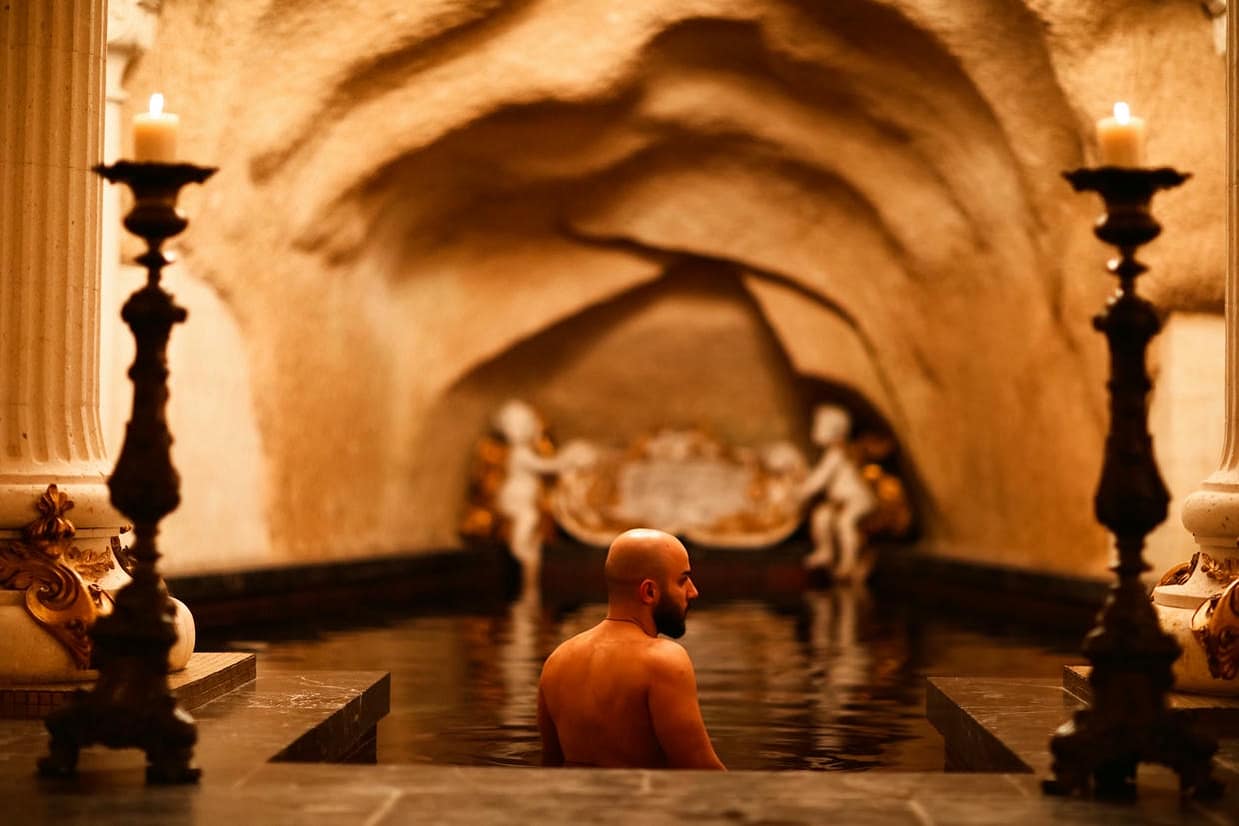
Turkish Hamam Bath Guide: Everything You Need to Know
The Turkish bath (hamam) is an institution that has been practised in essentially the same form for 600 years. It is one of the most distinctive cultural experiences in Turkey and one that many first-time visitors find unexpectedly enjoyable once they understand what to expect.
What Is a Hamam?
A hamam is a heated bathing complex built around a large central marble platform (gobektasi — literally “navel stone”) heated from below. The ritual involves three stages: warming the body in the hot room, being scrubbed with a kese (coarse mitt) to remove dead skin, and receiving a soap massage. The full process takes 60 to 90 minutes.
The tradition descends from Roman baths combined with Ottoman refinements. At their peak in the Ottoman Empire, Istanbul had over 300 hamams. Today approximately 60 remain operating, of which a dozen or so serve tourists.
What Happens Step by Step
1. Arrival and changing: You are given a pestemal — a thin cotton wrap — and directed to a changing cubicle (halvet). Remove all clothing and wrap the pestemal around your waist. Lock your valuables in the provided cubicle or leave them at reception.
2. The warm room (iliklik): You enter the warm room to begin sweating and opening the pores. Temperature is typically 35 to 45C. Sit and relax for 10 to 15 minutes. Some hamams have a cooler antechamber where you begin before moving to the hotter central room.
3. The hot room (hararet): The main domed space with the heated marble platform at the centre. Lie on the gobektasi and continue to sweat. The dome has star-shaped openings (halvet penceresi) that filter light — the atmosphere in a well-preserved historical hamam is genuinely beautiful.
4. The kese scrub: A tellak (attendant) scrubs your entire body with a coarse kese mitt. The amount of skin that comes off is startling. This is the most important part of the hamam ritual — the exfoliation it provides is unlike anything a shower achieves. Duration: 10 to 15 minutes.
5. The soap massage: The tellak fills a large pillowcase with foam from olive oil soap and covers your body in it, then works through a full-body massage using the foam. Not a deep-tissue massage — more of a vigorous, full-body wash combined with a lighter massage. Duration: 15 to 20 minutes.
6. Hair wash (optional): Your hair can be washed as an add-on for a small additional cost.
7. Cool room (sogukluk): After the treatments, you return to rest in the cooler room. Tea is served. Most people feel extremely relaxed — sometimes described as slightly boneless — for several hours afterward.
What to Wear and Bring
You are provided with a pestemal at all hamams. Swimwear underneath is optional in tourist hamams; the pestemal is sufficient covering for mixed hamams.
Traditional hamams are gender-separated: men and women use separate sections or visit on different days/times. The tellak will be the same gender as you.
Tourist hamams may offer mixed sessions where couples or friends can be treated together. Check before booking.
Bring: nothing is necessary. A small tip for the tellak (20 to 30% of the service cost) is standard and appreciated.
The Best Hamams in Istanbul
Cagaloglu Hamami (1741)
One of the last great Ottoman hamams built in Istanbul, constructed on the orders of Sultan Mahmut I. The architecture is exceptional — the main dome is 36 metres high, the star apertures create extraordinary light. Used historically by Franz Liszt, Florence Nightingale, and Kaiser Wilhelm II. Now a tourist hamam but one of the finest surviving examples.
Location: Sultanahmet, 5 minutes from Hagia Sophia.
Price: Approximately 1,200 to 1,800 TRY ($35 to $55) for the full service.
Cemberlitas Hamami (1584)
Built by the architect Sinan for Nurbanu Sultan. Two adjacent domed sections, one of the most photographed hamam interiors in Turkey. Central location in Sultanahmet.
Price: Approximately 1,000 to 1,600 TRY ($30 to $50).
Suleymaniye Hamami (1557)
Part of the Suleymaniye mosque complex. Restored in 2008 and one of the most architecturally impressive. Less touristy than Cagaloglu or Cemberlitas.
Location: Next to Suleymaniye Mosque.
Price: Approximately 900 to 1,400 TRY ($27 to $42).
Tarihi Galatasaray Hamami (1481)
The oldest continuously operating hamam in Istanbul, on Istiklal Caddesi in Beyoglu. Atmospheric location in the heart of the city. Separate sections for men and women.
Price: Approximately 800 to 1,200 TRY ($24 to $36).
Neighbourhood hamams: For the most authentic experience, visit a local neighbourhood hamam (mahalle hamami) rather than a tourist-focused one. Ask your hotel to recommend the nearest one used by local residents. Prices are significantly lower (300 to 500 TRY) and the atmosphere more genuine.
Practical Tips
Book in advance: The major historical hamams in Sultanahmet fill up by mid-morning in summer. Book online or by phone the day before.
Do not eat a heavy meal beforehand: The heat is more comfortable on a relatively empty stomach. Wait at least 2 hours after a large meal.
Remove contact lenses: The steam and heat are uncomfortable with contacts.
Arrive 15 minutes early: You need time to change, understand the process, and relax into it.
Drink water after: You will sweat significantly. Rehydrate well after the hamam.
Timing: Many people schedule the hamam on their first or second day in Istanbul — it is a good introduction to Turkish culture and the relaxation carries through the rest of the day.
Hamam Vocabulary
Pestemal — the thin cotton towel/wrap
Gobektasi — the central heated marble platform
Kese — the coarse scrubbing mitt
Tellak — the attendant who performs the scrub and massage
Hararet — the hot room
Halvet — a private room or changing cubicle
Natır — female attendant
Sabun — soap
Tas — the metal bowl used to pour water over you
 English (UK)
 Türkçe
 Deutsch
 Русский
 العربية
 Français
 Italiano
 Polski
 Български
 Español
 Nederlands
 简体中文
简体中文